The Key Role Of The Mobile in Facilities Management Today

Digitization is transforming every sector of business, and mobile technology is at the center of that transformation. Mobility enables organizations to create efficient business processes, improve collaboration, and provide employees with access to information anytime and anywhere.
As workplaces become increasingly flexible, facilities management teams must embrace digital technologies to meet changing business demands and customer expectations. Successful digital transformation requires the collaboration of people, processes, and technology.
Facilities Management (FM) involves managing a wide range of building-related services including cleaning, security, fire protection, air conditioning, landscaping, maintenance, testing, inspections, and asset management.
Today, Facilities Management has evolved from spreadsheets and lengthy email chains into intelligent systems where mobile applications play a crucial role. Mobile access extends the reach of FM solutions to every team member regardless of location, improving productivity and service delivery.
Facilities Management organizations face continuous pressure to improve operational efficiency, enhance customer satisfaction, and reduce costs. Mobile applications provide employees with easy-to-follow workflows that ensure consistency, accountability, and improved performance.
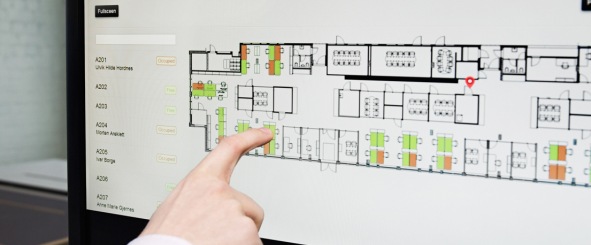
Facilities Managers are also under pressure to improve workplace utilization. Mobile applications provide real-time visibility into desk occupancy, meeting room utilization, and workplace usage patterns, helping managers make better decisions.
Safety and compliance are equally important. Mobile applications allow managers to receive alerts, record incidents, track service delivery, and maintain compliance documentation from any location.
Field-service engineers benefit significantly from mobile FM applications. They can update work orders, close jobs quickly, scan QR codes, track assets, and access important information directly from their mobile devices.
Many organizations are integrating mobile technology with cloud-based Facilities Management systems. This enables faster deployment, centralized updates, online training, improved collaboration, and reduced operational costs.
There are several other potential benefits of these new generation FM mobile apps.
- Reporting and tracking field teams becomes easier as engineers and facility personnel can update job status directly from their smartphones in real time.
- Mobile applications allow facilities managers to collect operational data such as temperature readings, CO₂ levels, equipment status, and performance metrics without being physically present at the site.
- Mobile technology supports maintenance management and inventory control by helping organizations track equipment and related assets efficiently.
- GPS-enabled mobile applications improve workforce allocation, employee tracking, accountability, and field-service visibility.
Conclusion
Facilities Management professionals can gain significant advantages from adopting well-designed mobile applications. Modern FM mobile solutions offer intuitive interfaces, improved accessibility, real-time reporting, and stronger operational control.
Mobile applications help organizations manage work more effectively, support strategic decision-making, improve productivity, and reduce operational costs.
Across the world, mobile Facilities Management solutions have already transformed the way facilities are managed. As digital adoption continues to accelerate, mobile technology will become an essential component of every successful Facilities Management strategy.